Write the journey as a sequence
“A short commute” leaves out most of the useful detail. Try this instead: leave a shared entrance, travel along a residential street, cross a busy junction, stop at a shop, then enter a building with a narrow lift. Each transition asks something different of the vehicle. A folding cycle might help at the entrance; a cargo compartment might help at the shop; neither automatically solves the junction.
Make a list of every stop and transfer, including the return journey. Add the parts that happen only occasionally: collecting a parcel, working late, meeting someone or taking a train home in heavy rain. You are not looking for a machine that wins every possible trip. You are identifying which compromises occur every day and which have a credible backup.
Compare jobs, not silhouettes
A Brompton, a Tern Vektron and a Gocycle all invite discussion about compact cycling, but their folding methods, handling arrangements and ownership needs are not interchangeable. Compare the exact model, battery configuration and manual. A carryable folded package and a package you can roll along a platform are two different advantages. Decide which one your route actually needs.
Seated compact vehicles raise different questions. Honda’s Motocompacto and Toyota’s C+walk family are useful research references for packaging and low-speed movement, but their intended settings and market-specific permissions need separate checks. A seat does not establish accessibility, and small external dimensions do not establish permission to ride on a footway. Start with the job, then investigate whether a particular product is permitted and suitable.
Count the bag as part of the vehicle
Put your normal items together before comparing specifications. Include a lock, charger if needed, waterproof clothing, lunch and whatever comes home with you. Check whether a published load limit refers to the rider, total payload, a rack or an individual compartment. These figures cannot be substituted for one another. Passenger carriage needs explicit manufacturer approval and appropriate equipment.
Then examine where the load sits. A bag hanging from a handlebar can interfere with steering or controls. A secure low compartment may help packaging but introduce a lifting or reaching challenge. Test access while wearing your usual clothing. If the arrangement depends on holding a bag in one hand while riding, it has not passed the journey test.
Separate ride time from total effort
Measure the outing from door to door. Unlocking, unfolding, checking tyres, finding permitted parking and carrying equipment upstairs all count. So does the walk from the nearest suitable parking place. A slightly slower ride can still produce the easier day if it removes a difficult lift or a long search for secure storage.
Electric assistance introduces another layer rather than removing every constraint. Hills, temperature, tyre condition, rider input and payload can affect energy use. Use a manufacturer’s published range only with its test assumptions attached. Leave a margin for your route and ask what happens if the battery is low: can you pedal, push or otherwise move the vehicle safely, and can you manage its unpowered weight?
Use a small decision table
| Journey need | What to inspect | Evidence to request |
|---|---|---|
| Ride plus train | Folded size, lifting and battery restrictions | Exact manual and current operator policy |
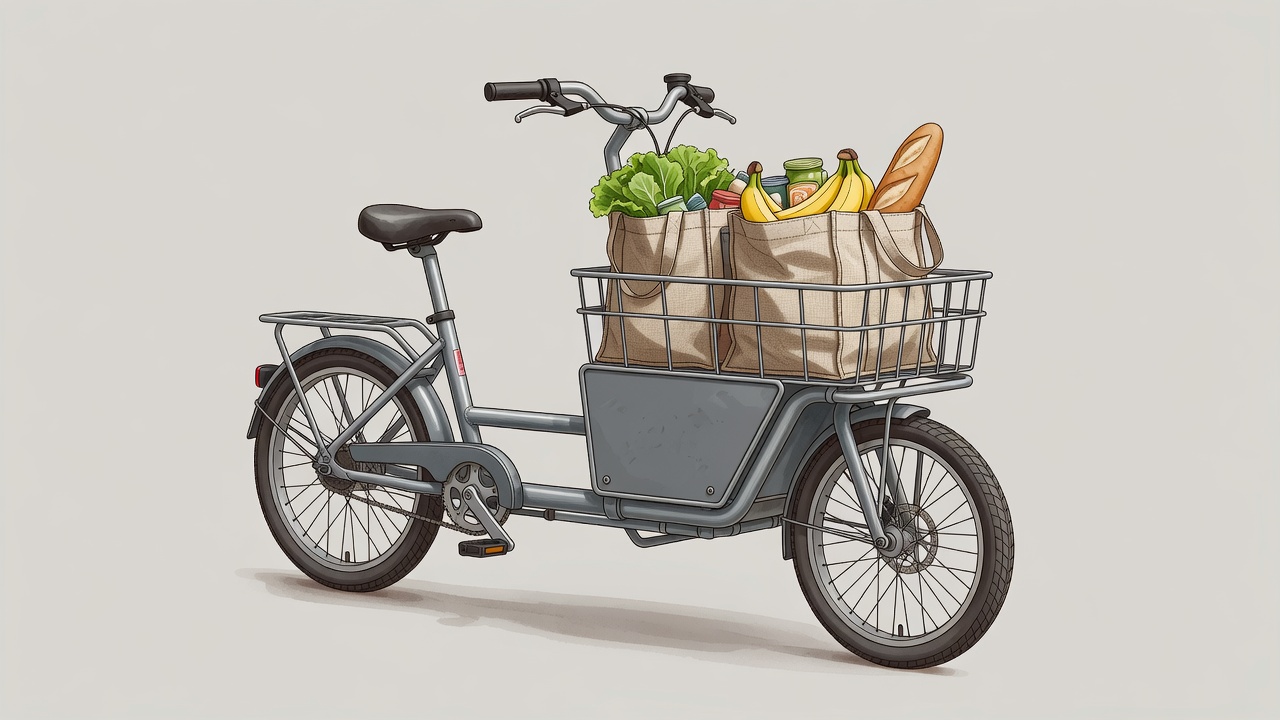
| Shopping stop | Approved cargo mounting and stable parking | Manufacturer load instructions |
| Seated travel | Mounting, braking and permitted setting | Demonstration and local classification |
| Shared entrance | Door clearance and turning room | Measured dimensions and building agreement |
Comparison basis: manufacturer instructions and operator rules, not independent laboratory measurements. Consult the linked primary sources below for the specific product or service.
Finish with a fallback
Ask how you get home after a puncture, a missed connection or an unexpected change of plans. A taxi may not accept a bulky vehicle; a bus may have restrictions; carrying it might be unrealistic. Establish the fallback before buying. Borrowing or arranging a supervised test can reveal more than another evening comparing headline specifications.
The best result may be a familiar bicycle, walking plus public transport, or a compact vehicle used only on certain days. That is not a failure of imagination. It is a transport choice grounded in the actual work your journey asks you to do.