Identify the category before the route
“Personal mobility” is a useful conversation starter, not a universal legal category. Pedal cycles, electrically assisted cycles, powered personal transporters, mobility aids and quadricycles can sit under different rules. A seat, a narrow body or a low advertised speed does not settle classification. The exact configuration and the rules where you intend to travel matter.
In the European Union, Regulation (EU) No 168/2013 provides a type-approval framework for certain two- or three-wheel vehicles and quadricycles, with defined exclusions. It is not a blanket permission to take any small electric vehicle anywhere. National traffic law, local restrictions, licensing, insurance and equipment requirements remain separate questions. Consult the actual category documentation rather than inferring it from a marketing label.
Separate standards from permission
You may encounter EN 15194 in discussions of electrically power-assisted cycles, EN 17128 for certain personal light electric vehicles, and the ISO 4210 series for bicycle safety. These references address defined scopes and requirements. They do not all apply to every compact vehicle, and a standards reference does not independently authorise use on a road, pavement or cycle route.
Ask which edition, product configuration and supporting documentation a supplier is referring to. A vague claim that a device is “European compliant” is not enough to establish the route you may use. A conformity document, an operator policy and a local traffic rule answer different questions. Keep them separate in your research notes.
Walk the difficult sections
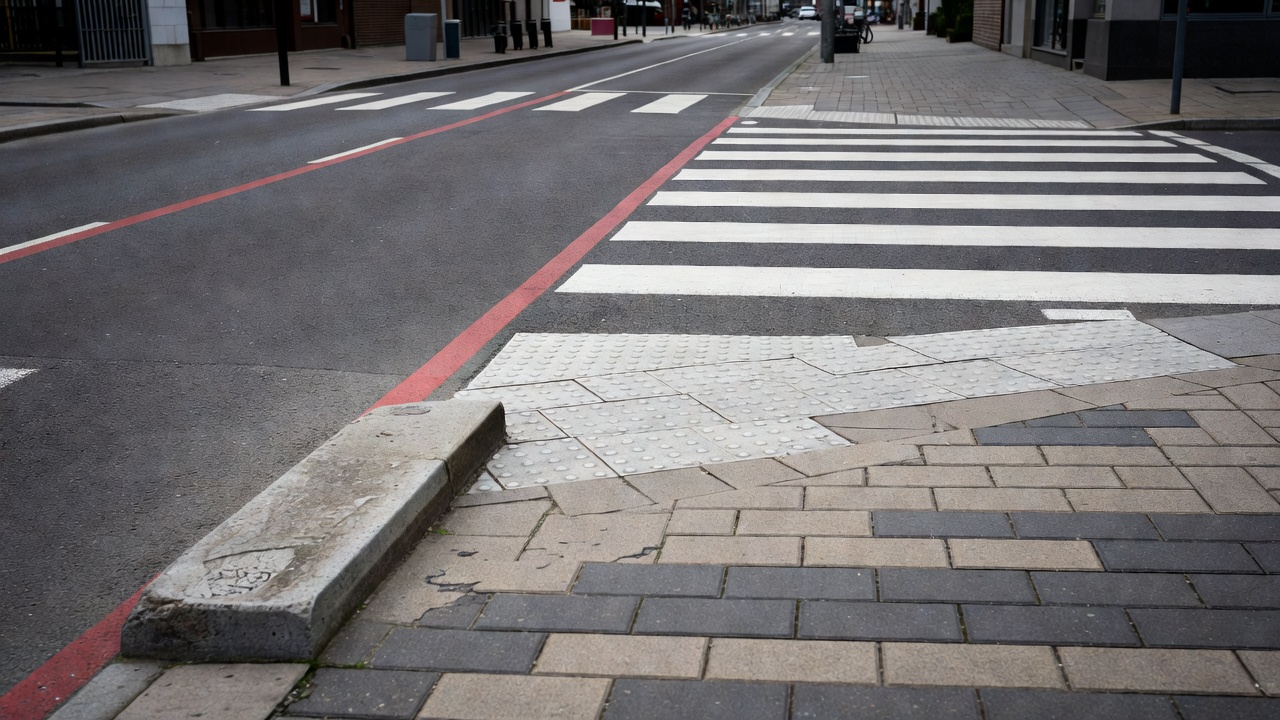
A route map can hide the details that decide whether a small vehicle feels manageable. Inspect drainage channels, uneven paving, tram tracks, steep crossfalls and narrow pinch points. Small wheels and low ground clearance deserve particular scrutiny, but handling depends on the whole design, tyres, speed and conditions. Do not turn a design characteristic into a universal safety verdict.
Look at crossings and stopping places as carefully as moving sections. Can you wait without obstructing a footway? Can you see and be seen around parked vehicles? If the approved response to a difficult section is to dismount, can you push the vehicle comfortably while controlling your bag? Plan a different route when the answer is no.
Leave room for other people
Shared space is not empty space waiting to be used. A person with a white cane, a wheelchair user or someone managing a pushchair may need a predictable clear route. Parked devices must not narrow that route or conceal tactile information. Quiet operation is not permission to pass closely, and adding a bell does not transfer responsibility to pedestrians.
Choose a permitted, considerate parking position before the trip. When an entrance is busy, stop clear of the flow and follow the applicable rules for dismounting or moving on foot. If a vehicle is too awkward to manoeuvre without blocking people, that is a meaningful limitation of the complete journey—not a problem other travellers should have to absorb.
Do not confuse compactness with cycle access
Citroën Ami, Microlino and Renault Twizy are useful references when considering small enclosed transport. Their compact forms raise worthwhile questions about parking and weather protection, but an enclosed vehicle is not a bicycle simply because it occupies less space than a conventional car. Exact variants and national treatment must be checked before making any route comparison.
The same caution applies to cargo forms. A wider cycle or unusual body may encounter barriers and turning constraints even where its category is permitted. Measure the real envelope, including mirrors and cargo. Do not remove required equipment or bypass access controls to make a route appear feasible.
| Question | Primary source |
|---|---|
| What category is this vehicle? | Vehicle documentation and national transport authority |
| May it use this street or route? | Applicable traffic law, signs and municipal guidance |
| Can it use this station? | Station owner and transport operator |
| Is this parking position acceptable? | Local parking rules and access requirements |
Source basis: official legal and authority materials below. The table is a research method, not a legal determination.
Build an alternative route around temporary works, poor surfaces and unavailable crossings. If the only workable journey depends on using a prohibited section or squeezing past pedestrians, the concept has failed this route. A genuinely practical mobility idea earns its space without borrowing someone else’s access.