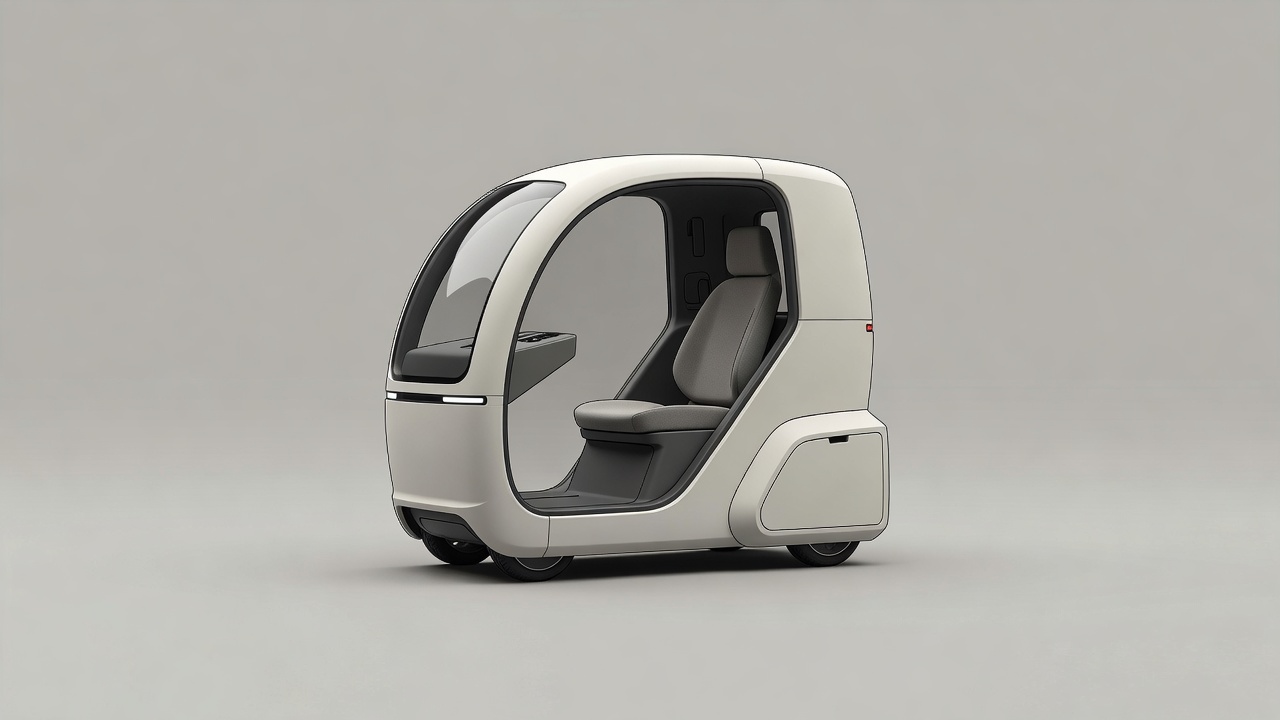
Ask what the image proves
A render can communicate packaging, posture and visual intent. It does not demonstrate braking, stability, weather sealing or comfortable use over a full journey. A video of a working prototype establishes more, but still may show a carefully chosen surface, rider and load. Treat every piece of evidence according to the question it can actually answer.
Start a simple record with the source, publication date, intended market and exact model or concept name. Distinguish the date a page was published from the date the underlying test took place. A recently shared clip may show an old demonstrator. A launch announcement may concern a different market from the one where you live.
Use status labels carefully
We separate illustrative concepts, working prototypes, limited trials and retail propositions. These are editorial categories, not certification marks. A project can move backwards, pause or change form. Availability should always be checked directly with the relevant supplier, and an order page alone does not demonstrate delivered vehicles or dependable after-sales support.
Real projects help explain why the distinctions matter. Honda Motocompacto is a reference for compact seated packaging; Citroën Ami and Microlino prompt questions about enclosed small vehicles; CityQ raises questions about weather-protected cargo-cycle forms; and C+walk illustrates another approach to short-distance movement. These names identify research leads, not a claim that every product is currently available or permitted in your country.
| Stage | Potential evidence | Still unresolved |
|---|---|---|
| Illustrative concept | Design intent and proposed layout | Function, safety, manufacture and availability |
| Working prototype | A demonstrated function under stated conditions | Repeatability, durability and production form |
| Limited trial | Use by a defined group in a defined setting | Transfer to other users, routes and rules |
| Retail proposition | Specific terms, documentation and supply offer | Your suitability and long-term support experience |
Editorial framework · 2026. The categories describe evidence types; they do not assign a verified current status to the named products.
Read the conditions beside the headline
A weight claim needs a configuration: battery included or excluded, accessories fitted or omitted, and the exact production version. A range claim needs a method: rider and load, terrain, temperature, assistance setting and stopping pattern. Without those details, a figure is a prompt for questions rather than a sound comparison.
Likewise, “fits anywhere” is not a measurement. Ask for folded and unfolded dimensions, turning clearance, storage orientation and any restrictions on handling. If a manufacturer’s demonstration includes a lift or doorway, compare its dimensions with your own. A clever sequence performed by a practised demonstrator may still be difficult when you are carrying shopping or wearing winter gloves.
Check the ownership proposition
Before a deposit or purchase, identify the contracting business, delivery territory, total payable cost, cancellation terms and warranty process. Check whether a local repairer will work on the exact model. Ask how tyres, brake parts, hinges, chargers and batteries can be replaced, and whether specialist software or tools are needed. A small vehicle can create a large inconvenience if a minor proprietary part is unavailable.
Connected functions deserve their own questions. Can you unlock and use the vehicle without a continuing cloud service? What happens if the app no longer supports your phone? Is a subscription necessary for a feature you regard as essential? These are practical transport questions, not optional technology details, when the vehicle is meant to get you home.
Look for evidence beyond a launch
A useful trial report explains who participated, where the vehicles travelled, how long the trial ran and what went wrong. It separates observations from projections. Testimonials can be informative, but they do not replace a transparent method. If the only evidence is promotional, say so in your own notes rather than filling the gaps with optimism.
Independent reporting can add context, while manufacturer manuals remain important for operating limits and maintenance. Neither source replaces the transport authority for legal access. Use several kinds of source for their proper jobs. If two sources disagree, first check whether they refer to the same model, market and date before deciding which claim to trust.
Let uncertainty change the decision
You can admire a concept without depending on it. For an essential commute, unresolved servicing or delivery questions may be enough to wait. For a supervised demonstration, the same uncertainties may be acceptable within the organiser’s conditions. Match the strength of the evidence to the consequences of being wrong.
A practical future for personal transport does not require every invention to become a purchase. Sometimes the useful result is a better folding mechanism, a more accessible mounting arrangement or a clearer understanding of why storage matters. Keep the curiosity. Give the ordinary journey the final vote.